BUELL J0120.LR Cyclone Front Fork Suspension Damper Triple Left Right Tree
fits model: M2. make: Buell. year: 1999–2002.
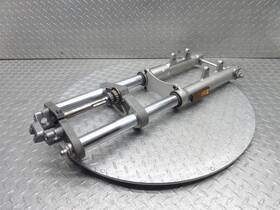
( Manufacturer Part Number: J0120.LR ), ( Part Type: Fork Suspension )
Review BUELL Cyclone Front Fork Suspension Damper Triple Tree Left Right fits M2 1999–2002
The Buell J0120.lr 2000-2002 CycleM2 front fork suspension damper triple tree is a crucial component of your motorcycle's suspension system. This triple tree is specifically designed for Harley-Davidson Buell motorcycles produced between 2000 and 2002.
This triple tree comes with integrated CycleM2 front fork cartridge dampers, which are renowned for their superior performance and adjustability. The damper units offer high and low-speed compression adjustments, allowing riders to fine-tune the suspension to their riding style and road conditions. The left and right damper units are identical, ensuring symmetrical performance and handling.
The triple tree is a critical connection point between the motorcycle's steering head and the fork legs. It is designed with precision engineering to ensure a perfect fit and optimal rigidity. The triple tree is manufactured from high-strength aluminum alloy, providing the ideal balance between weight savings and strength.
The triple tree is also designed with a built-in threaded bushing system that simplifies the installation process. The bushing system allows for easy adjustment and maintenance of the fork seals and steering head bearings, ensuring a smooth and precise steering feel.
The Buell J0120.lr 2000-2002 CycleM2 front fork suspension damper triple tree is an essential upgrade for those seeking improved handling, adjustability, and durability for their Harley-Davidson Buell motorcycle. Its high-performance design and robust construction make it an excellent choice for riders who demand the best from their suspension components.
Buying aftermarket suspension components, such as the Buell J0120.lr 2000-2002 Cycle M2 front fork suspension damper triple tree (left and right), can offer several benefits and drawbacks. Here's a brief analysis:
Benefits:1. Customization: Aftermarket parts allow riders to personalize their bikes to their preferences, providing better handling and ride quality.
2. Performance Enhancement: High-performance aftermarket suspension components can improve bike performance, making it more responsive and agile.
3. Cost-Effective: In some cases, aftermarket suspension components can be more cost-effective than buying OEM (original equipment manufacturer) parts.
Drawbacks:1. Installation Complexity: Installing aftermarket suspension components can be more complicated than installing OEM parts, requiring technical expertise and specialized tools.
2. Compatibility: Not all aftermarket parts are compatible with every bike model, making it essential to ensure that the chosen suspension components are compatible with the bike.
3. Quality Variability: Aftermarket parts can vary significantly in quality, making it crucial to research and choose a reputable manufacturer.
Ending Conclusion:Considering the benefits and drawbacks of buying aftermarket suspension components, it's essential to weigh the potential improvements in handling and performance against the installation complexity, compatibility, and quality variability. If you are confident in your technical abilities, have the necessary tools, and can find a reputable and compatible aftermarket suspension component, then it could be a worthwhile investment.
Recommendation:Before purchasing aftermarket suspension components, research the market thoroughly, read reviews, and consult with experts to ensure compatibility and quality. If possible, test ride bikes with similar components installed to get a better understanding of the potential benefits and drawbacks. Ultimately, the decision to buy aftermarket suspension components depends on your technical expertise, budget, and riding preferences.
Details:
part #: j0120lr prices
- $153.38-$165.29
specifications fotubrak:
- for models: M2
- for makes: Buell
- for years: 1999-2002
- mpn: J0120.lr
- part type: Fork Suspension
payments fotubrak:
- cash
- other
- credit card: Mastercard
- wallet: Google-pay
returns fotubrak:
- time: 30 Days
- paid by: Buyer
- policy: Returns Accepted
general fotubrak:
- condition: Used
- Suspension Handling > k Suspension Parts > k Legs Tubes
shipping fotubrak:
- transit: 3-9 Days
- type: Fixed
- carrier: UPS
- class: Standard
- cost: $0.00
- service: UPS Ground
seller fotubrak:
- city: Anaheim, California
- # reviews: 88929
- rating: 100.0%
offer fotubrak:
- started: February 11, 2026
- sold: 0
- quantity: 1
- options: Ship-to-home
- availability: In Stock
Buell J0120.LR Is Similar To:
- 050594 Buell Tube Outer Fork Lightning Firebolt (29.6% similar) The part is in good mechanical condition and completely functional. It is priced to go, as the average price on going for close double of my ask. The part is coming directly off a 2003 XB9S lightning. You are buying for a front right fork outer tube...(April 19th, 2018)
- 46095 98y Buell Lightning Left Fork Fits (26.6% similar) ...(April 19th, 2018)
- 47111-23h0 Buell Lightning Front Fork Suspension Mount Brackets (43.7% similar) ...(June 23rd, 2018)
- 61008042000 Buell Ulysses Left Front Fork Suspension Straight (51% similar) ...(June 23rd, 2018)
- Buell Ulysses Right Fork Internal Damper Keihin (44.4% similar) ...(March 25th, 2018)
- J8142.1b7 Rev C Unbranded Erik Buell Ebr Motorcycle Left Front Fork Slide (34.8% similar) Erik buell racing Ebro motorcycle left front fork, slide pipe comp manufacturer part number: J8142...(November 7th, 2018)
- J8143.1b7 Rev C Unbranded Erik Buell Ebr Motorcycle Right Front Fork Slide (34.6% similar) Erik buell racing Ebro motorcycle right front fork slide pipe comp manufacturer part number: J8143...(November 7th, 2018)
- J9146.t Buell Fork Cap (23.6% similar) Buell J9146...(October 1st, 2017)
- Pin 6531-02-017 Buell 2002 Cyclone (29.5% similar) Age and mileage should be considered in determining normal wear. No appointment necessary. Please review the pictures to left. It is the solution to getting you back on road of freedom. So what is the small print. In most states, the original vehicle identification number is replaced with a custom ...(November 17th, 2017)
- Pin 6724-02-017 Buell Forks Fork Left Right Triple Tree (39.2% similar) States but all us. Frames, engines and major components come with a bill of sale from pinball cycle parts, inc. Good Dino run. So what is the small print. Age and mileage should be considered in determining normal wear. Please double check for fitment your application. Com, call us or visit on ...(August 30th, 2018)
- Pin 6737-02-017 Buell Xb Ulysses Forks Fork Left Right Triple Tree (41.6% similar) It is the solution to getting you back on road of freedom. View full image this is the bike part came off of. The bike had an 1200CC engine and a 5 speed transmission. We bring our showroom to you by accurately describing and photographing the honest condition of each unique part. It is illegal to ...(January 31st, 2019)